
When Foot Numbness Starts in the Back: An Osteopathic Case Story
When Your Back “Suddenly” Gives Out: How the Body Compensates and How Osteopathy Can Help
December 4, 2025When Scoliosis Affects More Than the Spine: Breathing, Rib Mobility, and Even Sinus Congestion
January 5, 2026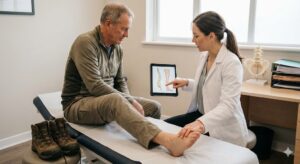
“Charles” (name changed) is a retired lawyer in his mid-60s. For almost three years, he had been living with a strange, stubborn problem: the bottom of his right foot felt numb, as if he were walking on a small rock hidden in his shoe.
He liked to stay active, especially hiking, but every step reminded him that something was not right.
A podiatrist diagnosed him with “plantar plate syndrome” and prescribed anti-inflammatory medication and orthotics. The medication helped a little, but the numbness never really changed. Over time, it began to limit the activities he enjoyed most.
A New Pain on Top of an Old Problem
After an intensive hiking trip, a new pain appeared in the front of the same foot, between the 3rd and 4th toes. Walking became uncomfortable, and the pain could reach 5/10. A short course of Naproxen calmed it down, but the combination of long-standing numbness and new forefoot pain brought him to osteopathy.
At his first visit, we did what osteopaths do best: listen carefully to the story, ask detailed questions, and then look at how the whole body moves and functions.
What the Exams Revealed
Charles also had a history of low back pain. An MRI of his lumbar spine showed disc wear and a small herniated disc at L5-S1, the junction between the lumbar spine and the sacrum. That is a key area for nerves that travel down the leg into the foot.
On osteopathic examination, several things stood out:
- The lumbar spine and lumbosacral junction were stiff and not moving well.
- There was sensitivity along the right sciatic points.
- The interosseous membrane (the tissue between the two bones of the lower leg) on the right side was irritated.
- Specific metatarsal bones in the right foot, particularly the 4th, were sensitive and restricted.
In other words, the problem was not just “in the foot.” There were mechanical and tissue tensions all along the chain from the lower back to the leg and into the foot.
The Osteopathic Approach
Treatment focused on three main areas:
- Lumbar spine and pelvis
Gentle traction and decompression techniques were used at L5-S1 and the surrounding segments to improve mobility, reduce stiffness, and create more space for the nerve structures. - Leg and ankle
The interosseous membrane and surrounding soft tissues were treated with myofascial and ligamentous techniques to decrease tension and improve circulation and nerve mobility down the leg. - Foot and forefoot
The tarsal and metatarsal bones were mobilized, especially around the painful 3rd–4th intermetatarsal space and the sensitive 4th metatarsal. This helped redistribute forces under the foot and reduce local irritation.
We also discussed his orthotics, which were old and due for reassessment. The plan was to continue treatment, review the upcoming nerve conduction study, and then decide together whether to update the orthotics or eventually try a period without them.
How Things Evolved
After a series of treatments:
- His low back pain improved significantly and his sleep became better.
- The sharp pain between the toes decreased from 5/10 down to about 2/10.
- The numbness under the foot was still present, although less bothersome.
This is a typical pattern in complex, long-standing issues: pain can improve relatively quickly, while nerve-related symptoms such as numbness often need more time and may require additional investigations. In his case, a nerve conduction test was scheduled to better understand whether the nerve itself was damaged or simply irritated.
What You Can Take From This Story
This case highlights several important principles of osteopathy:
- The body is a whole. A foot symptom may be maintained or aggravated by a problem in the lower back, pelvis, or leg.
- Structure and function are linked. Stiff joints, tight membranes, and irritated soft tissues can affect how nerves move and how forces travel through the body.
- Chronic problems are often multi-factorial. Orthotics, footwear, old injuries, spinal disc issues, and activity levels all play a role.
If you have persistent foot numbness, forefoot pain, or low back issues, an osteopathic assessment can help identify how these areas are connected and how to restore better balance and movement. In some cases, we work in collaboration with your family doctor, podiatrist, or other specialists, especially when tests such as MRI or nerve conduction studies are involved.
Every case is unique, but the goal remains the same: to reduce pain, improve function, and help you return to the activities that matter most to you.